
A woman with no history of diabetes can still develop high blood sugar partway through pregnancy, usually in the second or third trimester. The placenta is behind it. As it grows, it releases hormones such as human placental lactogen, estrogen and cortisol, and these make the body’s cells respond poorly to insulin. Normally the pancreas just makes extra insulin to cover the gap. When it can’t keep up, sugar stays in the blood instead of moving into the cells. That’s gestational diabetes in pregnancy, and it’s the reason most women are screened around 24 to 28 weeks.
According to Dr. Reshma K Priya, a gynaecologist in Bhubaneswar, “Gestational diabetes isn’t caused by something a mother ate or failed to do. It’s the placenta’s hormones making insulin less effective, and some bodies can’t keep up with the extra demand. Caught early, it’s usually quite controllable, and babies born to mothers whose sugar levels stay in range do very well.”
What Causes Gestational Diabetes, and Who Is More Likely to Get It?
Hormones set it off, but some women begin with a higher chance than others.
Diagram showing how gestational diabetes develops:
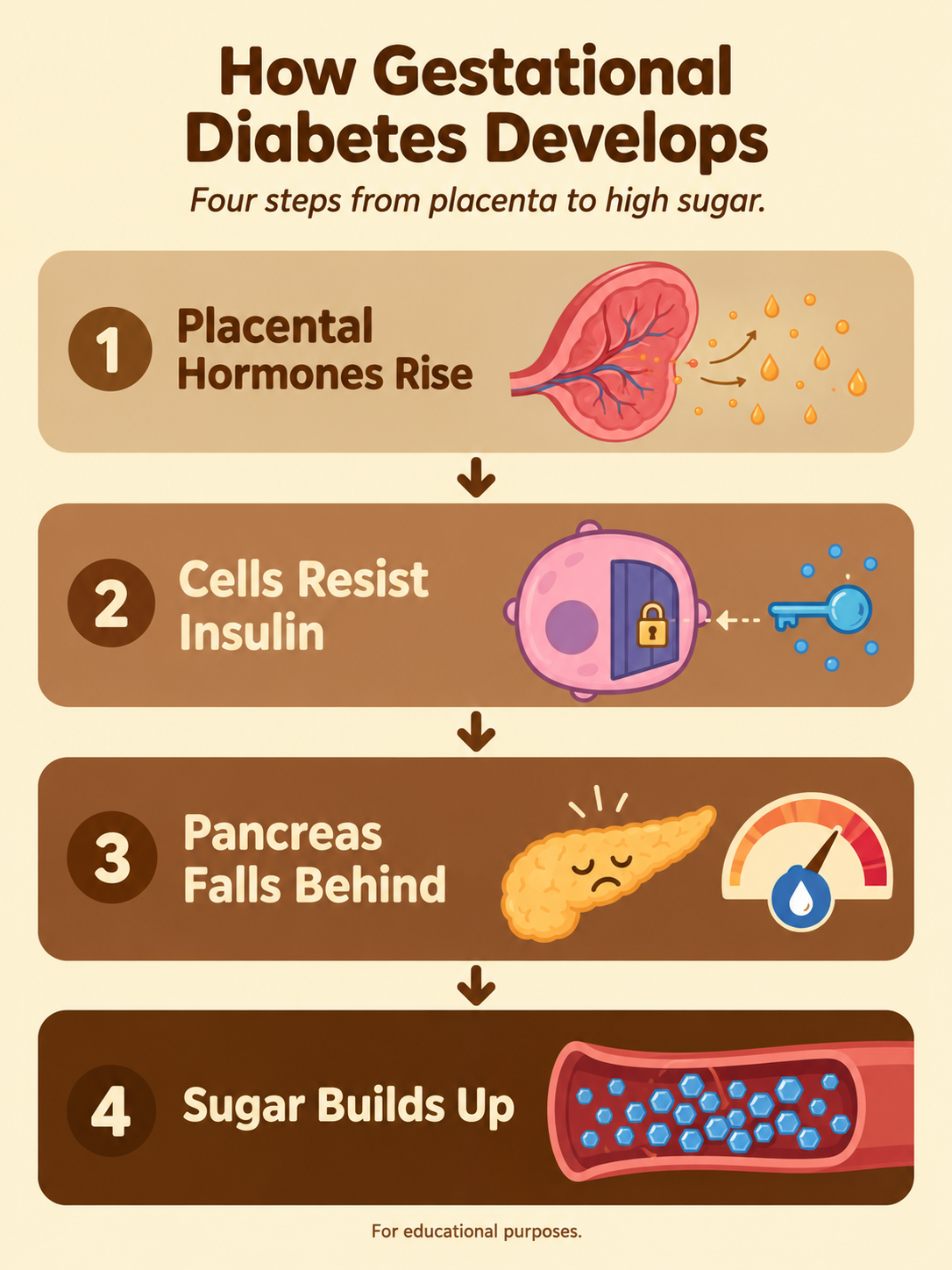
- The main cause: From the late second trimester onward, placental hormones push cells to resist insulin, and the bigger the placenta gets, the stronger that push. Most women’s pancreas copes. Some women don’t.
- Risk factors: Being overweight before pregnancy, having diabetes in the family, being over 35, PCOS, or an earlier pregnancy with gestational diabetes or a very large baby all make it more likely. Some of these can be changed. A healthier weight and regular activity before conception help, though they can’t guarantee prevention.
- Early signs: Usually none, which surprises people. Extra thirst, frequent urination and tiredness can appear, but they’re common in any pregnancy, so a glucose tolerance test makes the diagnosis, not symptoms. Women at higher risk are often tested earlier.
- What it isn’t: It isn’t passed on by the father, though a family history of diabetes on either side raises the risk. And it isn’t type 1 or type 2. It behaves most like type 2, because insulin resistance is the underlying problem.
Pregnancies with gestational diabetes tend to get closer follow-up, which is explained under high-risk pregnancy monitoring.
Wondering when your gestational diabetes screening should happen?
How Does Gestational Diabetes Affect the Baby and the Mother?
It’s reasonable to ask whether this poses any risk if sugar stays high. However, with good control most babies arrive healthy.
|
Area |
When Sugar Is Well Controlled |
When It Stays High |
|
Baby’s size |
Usually normal weight |
Larger than average (macrosomia) |
|
Delivery |
Often a normal vaginal birth |
Higher chance of a difficult labour or cesarean |
|
Newborn |
Steady after birth |
Low sugar in the first hours |
|
Mother’s blood pressure |
Closer to the usual risk |
Higher chance of preeclampsia |
- Why the baby grows larger: Extra sugar crosses the placenta, but insulin doesn’t. The baby’s own pancreas makes surplus insulin and stores the excess as fat, which is how macrosomia develops. A bigger baby can mean a harder delivery.
- Right after birth: A baby used to extra insulin can run low on sugar once the mother’s supply stops. That’s why nurses test the newborn’s sugar soon after birth, and feeding early usually corrects a dip.
- Preeclampsia and delivery: Mothers with gestational diabetes are more likely to develop preeclampsia, so blood pressure and a urine check are part of every visit. Good control brings that risk down.
- Later in life: For most women sugar settles within days of delivery, yet type 2 diabetes becomes more likely over the years, by as much as sevenfold. Children carry a slightly higher risk too. A postpartum glucose test a few weeks after birth, then regular screening, keeps watch.
Blood pressure also needs monitoring during pregnancy. You can read more about high blood pressure in pregnancy.
How Is Gestational Diabetes Managed Day to Day?
Gestational diabetes management rests on three everyday habits: meals, movement, and regular sugar checks. Medicine joins in only when those aren’t enough.
Four building blocks of gestational diabetes management:

- Gestational diabetes diet: Eat three meals and two or three small snacks rather than a few big ones, and build each around whole grains, pulses, vegetables and some protein. Sweets, sugary drinks and large helpings of white rice or maida send sugar up quickest. Fruit isn’t off limits, but keep servings small, have it with nuts or curd, and be careful with juice, dried fruit, and very ripe mango or banana.
- Sugar checks: You’ll use a small glucose meter to check your blood sugar at home, usually before breakfast and an hour or two after meals. Your doctor sets the targets, so look at the pattern over several days instead of worrying over one reading.
- Daily movement: Walking for 15 to 30 minutes after a meal takes the edge off the usual rise in sugar. If you’ve had bleeding or been told to limit activity, check with your obstetrician before you start.
- Medicine when needed: When meals and walking aren’t enough, insulin is added, and sometimes metformin. Insulin is regarded as safe for the baby, and needing medication doesn’t mean you’ve done anything wrong with your diet.
Sugar tends to return to normal soon after delivery, though a follow-up test makes sure. The scans and checkups during pregnancy are also part of routine pregnancy care.
Key Takeaways
Gestational diabetes in pregnancy starts with placental hormones that make the body resist insulin, and it often gives no warning signs, which is why screening at around 24 to 28 weeks matters. Meals, walking, home sugar checks and, if needed, medicine keep most pregnancies on course. A test after delivery is still worthwhile, since the chance of type 2 diabetes later stays higher.
FAQs
Does gestational diabetes go away after delivery?
Usually yes, though the chance of type 2 diabetes later stays higher.
What can I do to reduce my chance of gestational diabetes?
Aim for a healthy weight before pregnancy and keep moving; prevention isn’t guaranteed.
Is gestational diabetes dangerous for me or the baby?
It can be if sugar stays high, but controlled cases usually go well.
Are any fruits off limits with gestational diabetes?
None entirely, but go easy on juice, dried fruit and very ripe mango.
Disclaimer: This blog is for educational and informational purposes only and should not be considered professional advice.
