
Quick Summary
What it is ?
Colic is when a healthy baby cries for more than 3 hours a day, more than 3 days a week, for more than 3 weeks. It usually starts at 2 to 3 weeks of age, peaks around 6 weeks, and almost always settles on its own by 3 to 4 months.
Who it helps ?
This service is for parents of newborns and young babies under 4 months who are crying excessively, are unsettled after feeds, or have been told their baby has colic but want a proper assessment and clear guidance from a specialist.
Our approach
Dr. Kanhu Panda first rules out other causes of crying such as reflux, cow’s milk allergy, gas, and infection. Once confirmed, he guides parents with simple feeding adjustments, comfort techniques, and dietary advice that actually work at home.
At Rahat
Dr. Kanhu Panda leads colic management at Rahat Hospital, Bhubaneswar, supported by Dr. Abhishek Anand (Paediatric Surgeon) and Dr. Amareshwar Satpathy (Paediatrician and Neonatologist) giving your baby access to a full paediatric team from the very first visit.
Colic Management Treatment in Bhubaneswar

If your baby cries for hours every day and nothing seems to help, you are not alone. Colic is one of the most common and most stressful things new parents go through. The good news is that it is not dangerous, it does not mean anything is seriously wrong, and it does get better.
At Rahat Hospital in Bhubaneswar, our paediatric team led by Dr. Kanhu Panda, Consultant Paediatrician and Neonatologist, and supported by Dr. Abhishek Anand and Dr. Amareshwar Satpathy helps families understand why their baby is crying, rules out anything serious, and puts a simple, practical plan in place to make things easier for both baby and parents.
Conditions That May Mimic Infant Colic
Not all excessive crying in babies is colic. Before labelling it as colic, Dr. Kanhu Panda carries out a thorough check — the same detailed approach followed across all paediatric care at Rahat Hospital — to make sure nothing else is causing your baby’s distress.
Gastroesophageal Reflux (GER)
When milk comes back up from the stomach into the food pipe, it can cause pain and irritability. Babies with reflux may cry more after feeds, arch their back, or vomit frequently.
Cow’s Milk Protein Allergy (CMPA)
Some babies react to the protein in cow’s milk, whether through formula or through the mother’s diet if breastfeeding. Signs include crying, rashes, loose stools, or blood in the stool.
Gas and Wind
Babies swallow a lot of air during feeds. Trapped gas causes discomfort and crying that is often mistaken for colic. Correct feeding position and burping technique can make a significant difference.
Lactose Overload
In breastfed babies, too much low-fat foremilk can cause excessive gas and loose green stools. This is different from lactose intolerance and is managed with simple feeding adjustments.
Infection or Illness
Ear infections, urine infections, and other illnesses can cause a baby to cry excessively. A physical examination helps rule these out quickly.
Constipation
Infrequent or hard stools can cause discomfort and prolonged crying in infants. Dietary adjustments and guidance on normal infant stool patterns help address this.
Not sure if your baby has colic? Book a consultation with our paediatric specialist today.
Our Approach to Colic Management
Dr. Kanhu Panda takes a calm, step-by-step approach to colic. The goal is to first make sure nothing serious is going on, then give parents practical tools to manage the situation at home.
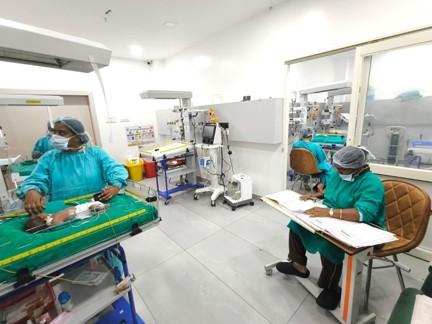
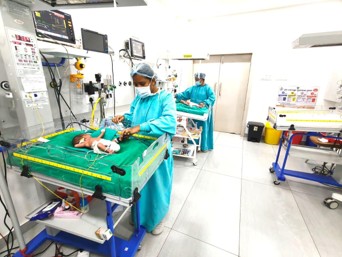
Step 1 — Full Assessment
Dr. Panda takes a detailed history of the baby’s feeding, sleep, stool pattern, and crying episodes. A physical examination is done to check for any signs of illness, reflux, or allergy.
Step 2 — Feeding Review
How a baby feeds makes a big difference. We check latch technique for breastfeeding mothers, bottle type and teat flow for formula-fed babies, feed frequency, burping technique, and whether the feeding position needs adjusting.
Step 3 — Dietary Guidance
For breastfeeding mothers, we advise on foods that may contribute to gas or sensitivity in the baby. For formula-fed babies, we advise on whether a switch to a hydrolysed or anti-colic formula is needed.
Step 4 — Practical Comfort Techniques
We teach parents simple, evidence-based techniques that help soothe a colicky baby, including gentle abdominal massage, the correct way to wind the baby, white noise, swaddling, and safe carrying positions.
Step 5 — Treatment if Needed
If a specific cause is identified such as reflux or cow’s milk protein allergy, Dr. Panda prescribes the appropriate treatment and sets up a follow-up to check progress. Where a newborn needs closer monitoring, our neonatal team steps in to provide the right level of care.
Meet Our Paediatric Team
Colic assessment and management at Rahat Hospital is supported by a team of three paediatric specialists who work together to give your baby the right care from day one.
Dr. Kanhu Panda
Consultant Paediatrician and Neonatologist
MBBS (Gold Medalist), MD Paediatrics | Berhampur University and Sambalpur University
Dr. Kanhu Panda leads paediatric and neonatal care at Rahat Hospital. A gold medallist with over a decade of clinical experience, he specialises in neonatal intensive care, paediatric critical care, and child health from birth through adolescence. He personally leads colic consultations, ruling out underlying causes and guiding parents with practical, clear advice. His vaccination and preventive care programme runs alongside every colic follow-up visit at Rahat Hospital.
Specialisations
Neonatology | Paediatric Critical Care | General Paediatrics | Vaccination | Child Health Promotion
View Profile ->
Dr. Abhishek Anand
Consultant Paediatric and Neonatal Surgeon
MBBS (Gold Medalist), DrNB Paediatric Surgery, FMAS | J.J.M. Medical College and Institute of Child Health, Kolkata
Dr. Abhishek Anand is a specialist paediatric and neonatal surgeon with over a decade of surgical training at one of India’s premier paediatric institutions. For colicky babies where a surgical cause such as intestinal malformation or structural anomaly needs to be ruled out, Dr. Anand is available within the same facility.
Specialisations
Neonatal Surgery | Laparoscopic Paediatric Surgery | Paediatric Urology | Paediatric Oncological Surgery | Hepatobiliary Surgery in Children
View Profile ->
Dr. Amareshwar Satpathy
Paediatrician and Neonatologist
MBBS, MD Paediatrics | Kalinga Institute of Medical Sciences and IMS and SUM Hospital, Bhubaneswar
Dr. Amareshwar Satpathy brings hands-on NICU and PICU experience to the paediatric team at Rahat Hospital. Trained in advanced neonatal procedures and emergency paediatric management, he provides additional specialist support for newborns and infants presenting with complex or unclear causes of excessive crying and distress.
Specialisations
NICU and PICU Care | High-Risk Newborn Management | Vaccination and Preventive Care | Paediatric OPD and General Care | Growth and Developmental Assessment
View Profile ->
Ready to help your baby feel better? Book a colic consultation with our specialist today.
Why Choose Rahat Hospital for Colic Management in Bhubaneswar?
A Full Paediatric Team, Not Just One Doctor
Your baby is seen by a team of three specialists — a paediatrician and neonatologist, a paediatric surgeon, and a neonatologist with NICU and PICU expertise. If the crying turns out to have a cause that needs surgical or intensive review, the right doctor is already in the same hospital.
We Rule Out the Serious Stuff First
We do not just tell you it is colic and send you home. We check thoroughly for reflux, allergy, infection, and other causes before confirming the diagnosis. Parents leave with answers, not uncertainty.
Simple, Practical Advice That Works
We focus on what you can actually do at home, not complicated instructions that are hard to follow with a crying baby and broken sleep. Every parent leaves with a clear, simple plan.
We Support Parents, Not Just Babies
Colic is exhausting. Dr. Panda takes time to listen to parents, reassure them that they are doing nothing wrong, and make sure they have support. A calm parent helps a calm baby.
Convenient Location in Bhubaneswar
Rahat Hospital is located in Saheed Nagar, Bhubaneswar, with easy appointment availability Monday to Saturday.
Frequently Asked Questions
Q1: How do I know if my baby has colic?
If your baby cries for more than 3 hours a day, on more than 3 days a week, and is otherwise healthy and feeding well, it is likely colic. A doctor’s assessment confirms this and rules out other causes.
Q2: Is colic dangerous for my baby?
No. Colic does not harm your baby and does not mean anything is medically wrong. It is distressing for parents but not a danger to the baby.
Q3: At what age does colic usually start and stop?
Colic typically starts at 2 to 3 weeks, peaks around 6 weeks, and almost always settles by 3 to 4 months of age.
Q4: Can my diet cause colic if I am breastfeeding?
Some foods in a mother’s diet such as dairy, caffeine, or certain vegetables may contribute to gas or sensitivity in some babies. Dr. Panda advises on dietary adjustments at the consultation.
Q5: Should I change my baby's formula for colic?
Not without medical advice. Some babies do better on an anti-colic or hydrolysed formula but this depends on the cause. Dr. Panda reviews the baby before recommending any formula change.