
Endometriosis is a chronic gynaecological condition in which cells much like those lining the womb take root where they shouldn’t. The ovaries and fallopian tubes are the usual sites, along with the outside of the uterus and other surfaces in the pelvis. That tissue still obeys the monthly cycle. It thickens and bleeds in step with the lining, but there’s no way for that blood to leave the body. The pelvis reacts with inflammation, scar tissue and adhesions, which can fuse organs that should move freely. And that’s why endometriosis and fertility are so often discussed together: the organs an egg and embryo rely on are the very ones affected.
According to Dr. Reshma K Priya, a gynaecologist in Bhubaneswar, “Endometriosis doesn’t mean a woman can’t conceive. Many do, some without any treatment. What changes is the odds, because inflammation and scarring around the ovaries and tubes can interfere with how an egg is released and picked up. The earlier it’s recognised, the more options a woman has.”
In What Ways Does Endometriosis Affect Fertility?
The endometriosis effect on fertility isn’t down to one thing. Several problems tend to overlap.
Four ways endometriosis can reduce the chance of conceiving:
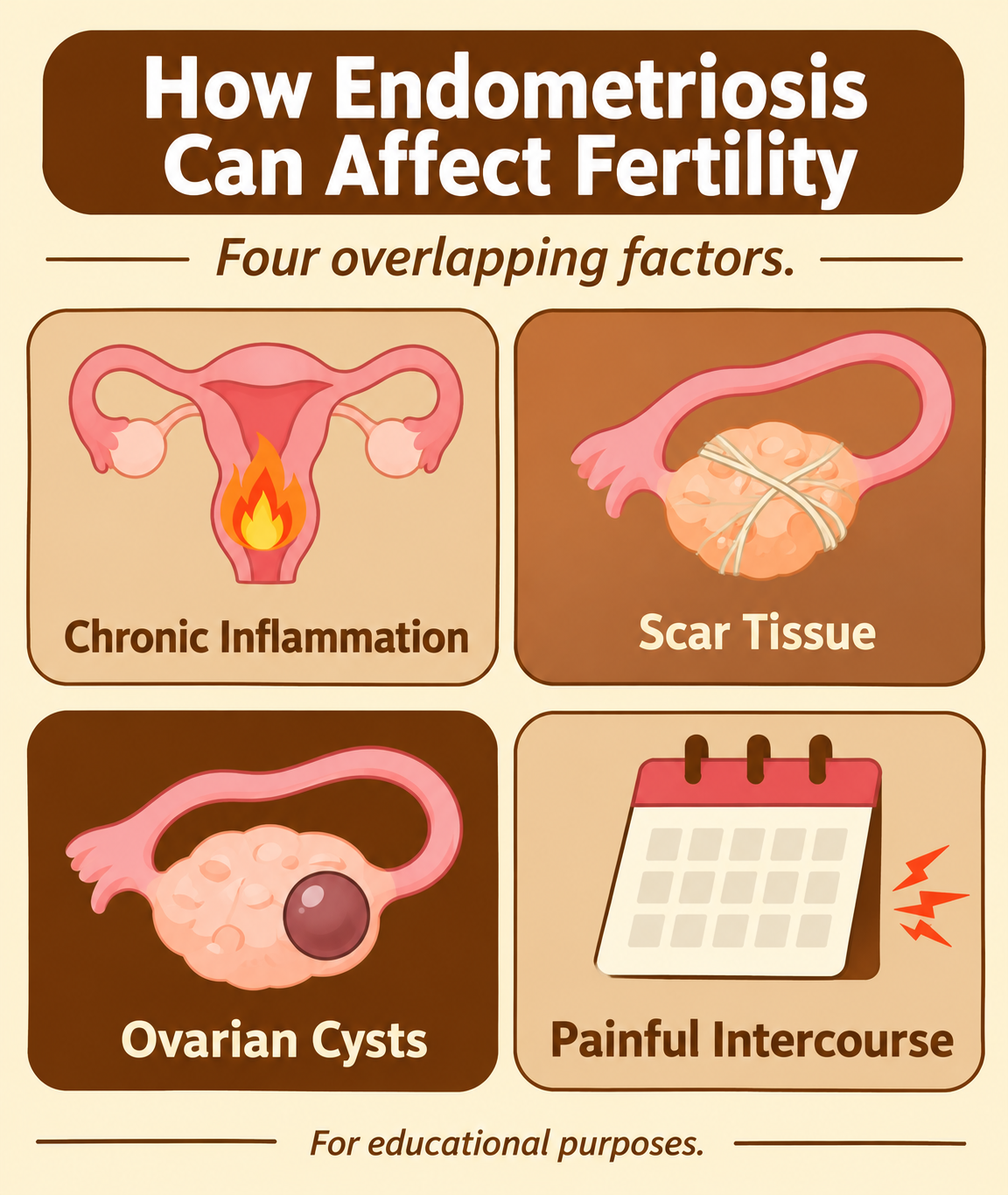
- Chronic inflammation: The pelvis stays irritated even between periods. Over time that inflammation can affect egg quality, hinder sperm movement, and make implantation less likely.
- Adhesions and scarring: Scar tissue can pull the ovaries and tubes out of position, or close them off altogether. An egg may then never be released or picked up properly, even when ovulation itself is perfectly normal.
- Endometriomas: An endometrioma is an ovarian cyst filled with old blood, which is why it’s often called a chocolate cyst. As it grows it can displace healthy ovarian tissue and lower the ovarian reserve, so fewer eggs remain available.
- Painful intercourse: Deep pain during sex is common with endometriosis. If that means sex becomes less frequent around ovulation, each month’s chance of conceiving drops a little.
Diagnosis typically begins with a pelvic examination and scans, and keyhole surgery is used when more detail is needed. These are outlined under gynaecology services.
Wondering whether your period pain could be more than ordinary cramps?
Can a Woman With Endometriosis Still Conceive?
Yes, plenty of women do. Endometriosis also isn’t the only reason conception can take a while.
|
Stage |
What Is Usually Found |
Typical Effect on Conceiving |
|
Minimal to mild |
Small patches, little scarring |
Many conceive naturally or with simple help |
|
Moderate |
Ovarian cysts, some adhesions |
Chances reduced, treatment often needed |
|
Severe |
Dense scarring, large cysts, blocked tubes |
Often needs IVF |
- Is it the main cause? No. Women who have trouble conceiving are six to eight times more likely to have endometriosis, which points to a strong link. Even so, ovulation problems, blocked tubes, sperm quality and age contribute just as much. That’s why both partners are assessed.
- Surgery: When disease is minimal to mild, a laparoscopy that removes or burns off the patches and frees scar tissue improves the odds of conceiving, compared with looking alone. Endometriomas need a more cautious approach, since removing them can reduce ovarian reserve.
- Simple fertility treatment: Younger women with a healthy ovarian reserve and mild disease usually start with ovulation tablets and intrauterine insemination. If a few months go by without a pregnancy, the approach is revisited.
- Assisted reproduction: IVF is usually suggested sooner when age is 35 or over, the egg count is low, the tubes are blocked, or a long stretch of trying hasn’t worked. It bypasses the tubes and the pelvic scarring altogether.
Ovulation problems are a different cause of delayed conception, and they’re covered under PCOS and pregnancy.
What Are the Symptoms, and What Does the Long-Term Picture Look Like?
The symptoms often start in the teens, and they’re easy to write off as heavy or painful periods, so diagnosis can take years. A few women have hardly any and only find out during a fertility work-up.
Common endometriosis symptoms shown as four illustrated cards:

- Painful periods: The hallmark is cramping that’s severe, keeps worsening, or barely responds to usual painkillers. For some women the pain also shows up between periods, or when they pass stool or urine during menstruation.
- When it starts: It may begin with the very first periods in the teens. Most women aren’t diagnosed until their 20s or 30s, though, often after years of hearing that the pain is normal.
- How it’s diagnosed: A pelvic examination and an ultrasound or MRI can reveal cysts and deeper disease in women with ongoing pelvic pain, but a normal scan doesn’t rule it out. The definitive test is laparoscopy, a keyhole procedure that lets the surgeon look at the pelvis directly.
- Living with it long term: Endometriosis is chronic, but it doesn’t shorten life expectancy, and symptoms usually ease after menopause. Pain relief, hormonal treatment and surgery keep most women well. A few studies have noted a slightly higher chance of certain ovarian cancers, although the absolute risk remains low.
Cycle changes alongside pain are worth recording, and the common causes are explained under irregular periods. Bring a diary of pain days, bleeding and cycle dates to the first appointment, because it gives the doctor far more to work with.
Key Takeaways
Endometriosis is tissue similar to the womb’s lining growing outside the uterus, and the inflammation and scarring it causes can reduce fertility, though they don’t rule out pregnancy. It isn’t the only reason conception can be delayed, and the route, whether laparoscopic surgery or assisted reproduction, depends on the stage, age and egg count. It’s a lifelong but manageable condition, and earlier diagnosis widens the choices.
FAQs
At what age does endometriosis start?
It can begin with the first periods, often in the teens.
Is endometriosis the main cause of infertility?
No. It’s one cause among several, and many women with it conceive.
Can I get pregnant with endometriosis?
Yes, many women do, naturally or with treatment, though the odds are lower.
Can I live a long life with endometriosis?
Yes. It doesn’t shorten life expectancy, and symptoms can be managed.
Disclaimer: This blog is for educational and informational purposes only and should not be considered professional advice.
