If your diastolic blood pressure (the bottom number) reads 90 mmHg or higher after 20 weeks of pregnancy, that counts as high. Around 5 to 10 percent of pregnancies in India involve some form of high blood pressure. And that bottom number often tells a bigger story than the top one. Left untreated, it raises your risk of preeclampsia, stroke, and slower growth for the baby. That is why catching it early matters.
According to Dr. Reshma K Priya, Gynaecologist in Bhubaneswar,
“Most women focus on the top number. But during pregnancy, the bottom number is often the first to rise. A consistent reading above 90 needs a proper check-up, even when you feel absolutely fine.”
What Causes High Diastolic Blood Pressure During Pregnancy?
Your diastolic pressure shows how much force sits inside your arteries when your heart is resting between beats. In pregnancy, a few different things can push this number up. The cause often depends on when the reading first started climbing.
Here are the usual reasons:
- You already had high BP before pregnancy. This is called chronic hypertension. Sometimes it was picked up earlier, sometimes it shows up at your first antenatal visit.
- It started after 20 weeks. This is gestational hypertension. Your urine is still clear, but your BP is not.
- High BP plus protein in the urine or signs that other organs are under strain.
- Kidney issues. Even mild kidney trouble can push the bottom number up.
- Thyroid problems. Both overactive and underactive thyroid affect BP.
- Extra weight. A BMI above 30 raises your risk two to four times.
- Gestational diabetes or insulin resistance. Both make blood vessels stiffer.
- Family history. If your mother or sister had high BP in pregnancy, you are more likely to as well.
- Twins or triplets. More babies means more work for your circulation.
- Age above 35. Blood vessels naturally become less flexible with age.
Here is the key thing. If your diastolic crosses 90 mmHg, it needs a proper look. It does not matter if the top number looks fine. The bottom number has its own story to tell.
How Can High Diastolic Blood Pressure Affect Mother and Baby?
When the bottom number stays high for too long, the placenta does not get the blood flow it needs, and your organs start working overtime. How much it affects you depends on how high the numbers go and how quickly they are brought down.
For the mother, it can lead to:
- Preeclampsia, eclampsia, or HELLP syndrome. These affect several organs at once.
- Stroke or fluid in the lungs. A real risk once diastolic crosses 110 mmHg.
- Placental abruption. The placenta separating too early. Always an emergency.
- Kidney strain. Usually reversible, but needs close watching.
For the baby, it can lead to:
- Slower growth (IUGR). The placenta cannot deliver enough nutrients.
- Early delivery or low birth weight. Sometimes safer to deliver a little early.
- Low amniotic fluid or fetal distress. Picked up on scans and CTG.
- NICU care. Preterm or smaller babies often need Level 3 NICU
|
Diastolic BP (mmHg) |
What It Usually Means |
|
Below 80 |
Normal, nothing to worry about |
|
80 to 89 |
Slightly elevated, worth monitoring |
|
90 to 99 |
Mild hypertension, treatment often starts here |
|
100 to 109 |
Moderate, needs active management |
|
110 or above |
Severe, get to the hospital right away |
Find out if the Kegel Chair is right for you at Rahat Hospital, Bhubaneswar’s dedicated women’s health centre.
Symptoms and Warning Signs You Should Never Ignore
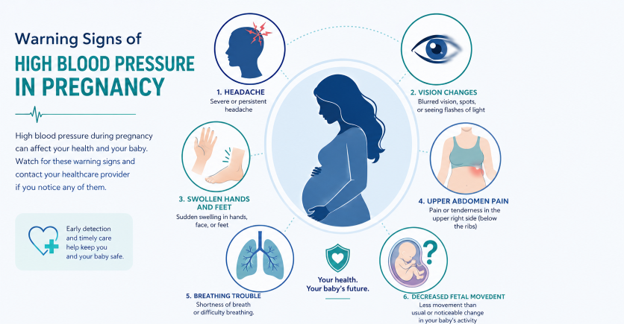
In the early stages, high BP often gives no signal at all. You can feel perfectly normal while your readings quietly climb. That is exactly why every antenatal visit includes a BP check, even when nothing feels wrong.
When symptoms do show up, they usually mean things have moved past the mild stage. Watch out for:
- A headache that will not go away. Rest, water, and your usual painkillers do not help.
- Changes in your vision. Blurry sight, flashing lights, spots, or dark patches.
- Sudden puffy swelling. Face, hands, or feet swelling up within a day, not the slow foot swelling most pregnant women get.
- Pain on the upper right side of your belly. Just below the ribs. Could point to liver strain.
- New nausea or vomiting after 20 weeks. Not morning sickness, a fresh wave that starts later.
- Trouble breathing. Feeling breathless even at rest.
- Passing less urine than usual. A sign your kidneys are working harder.
- Sudden weight gain. More than 2 kg in a single week from fluid your body is holding on to.
- The baby moving less. Fewer than 10 movements in 2 hours after 28 weeks.
Some women feel completely fine even when their BP has crossed dangerous levels. No warning, no discomfort. The only way to catch these silent cases is through regular check-ups. Do not skip them, even on weeks when everything feels normal.
How Can High Diastolic Blood Pressure Affect Mother and Baby?
When the bottom number stays high for too long, the placenta does not get the blood flow it needs, and your organs start working overtime. How much it affects you depends on how high the numbers go and how quickly they are brought down.
For the mother, it can lead to:
- Preeclampsia, eclampsia, or HELLP syndrome. These affect several organs at once.
- Stroke or fluid in the lungs. A real risk once diastolic crosses 110 mmHg.
- Placental abruption. The placenta separating too early. Always an emergency.
- Kidney strain. Usually reversible, but needs close watching.
For the baby, it can lead to:
- Slower growth (IUGR). The placenta cannot deliver enough nutrients.
- Early delivery or low birth weight. Sometimes safer to deliver a little early.
- Low amniotic fluid or fetal distress. Picked up on scans and CTG.
- NICU care. Preterm or smaller babies often need Level 3 NICU
|
Diastolic BP (mmHg) |
What It Usually Means |
|
Below 80 |
Normal, nothing to worry about |
|
80 to 89 |
Slightly elevated, worth monitoring |
|
90 to 99 |
Mild hypertension, treatment often starts here |
|
100 to 109 |
Moderate, needs active management |
|
110 or above |
Severe, get to the hospital right away |
When Should You Seek Immediate Medical Care?
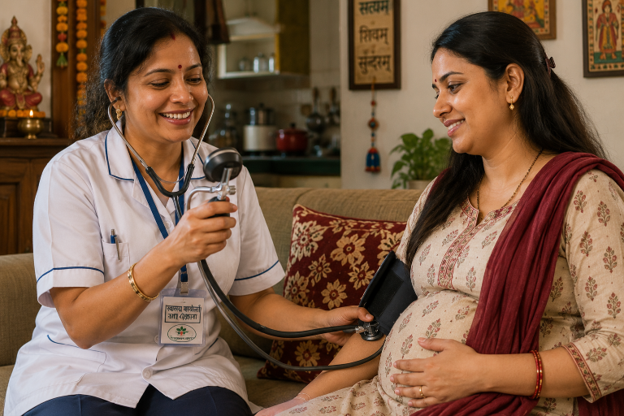
Not every high reading is an emergency, but certain situations need same-day evaluation without waiting for the next scheduled visit.
Seek immediate medical care if you have:
- Blood pressure of 160/110 mmHg or higher at home
- Severe headache that does not improve with rest
- Vision changes: Blurring, spots, or temporary loss of vision
- Severe upper abdominal pain
- Difficulty breathing or chest tightness
- Sudden severe swelling of face, hands, or feet
- Reduced or absent fetal movements
- Any seizure or convulsion: Call emergency services immediately
- Vaginal bleeding with high blood pressure.
Do not wait to see if it passes. Do not try to sleep it off. Do not ask on WhatsApp groups. Call your gynaecologist or head to the nearest hospital.
At Rahat Hospital, Bhubaneswar, women with high BP in pregnancy get structured high-risk monitoring. This means regular BP checks, blood and urine tests, growth scans for the baby, and input from heart or kidney specialists when needed.
FAQs
Q1: What diastolic reading is dangerous in pregnancy?
A reading of 90 mmHg or higher on two separate checks counts as hypertension. Once it crosses 110 mmHg, it becomes severe and needs same-day medical attention.
Q2: Will my BP come back to normal after the baby is born?
Usually yes. If your high BP started during pregnancy or you had preeclampsia, it settles within 6 to 12 weeks after delivery. If you had high BP before getting pregnant, it stays and needs long-term treatment.
Q3: Are BP medicines safe during pregnancy?
Yes, several are. Labetalol, methyldopa, and nifedipine are commonly used and considered safe for both mother and baby. ACE inhibitors and ARBs are avoided because they can harm the developing baby. Your doctor will pick the right one for you.
Q4: Can I prevent high BP in pregnancy?
Some cases can be prevented. If you are at high risk, a low-dose aspirin started before 16 weeks can lower your chance of preeclampsia by up to 60 percent. A balanced diet, gentle activity, healthy weight, and never skipping antenatal visits also help.
Q5: Does high BP always mean a cesarean?
No, not always. It depends on how well your BP is controlled, how the baby is growing, and how close you are to your due date. Many women with well-managed BP have a normal vaginal delivery.
