A 2.4 kg baby is technically low birth weight, because the line is drawn at 2.5 kg (about 5.5 lb). Fat is what keeps newborns warm, and these babies carry very little of it. That makes low birth weight newborn care a matter of small daily habits: keeping warm, regular feeds, washed hands, an early phone call. With that routine, most of these babies catch up well.
According to Dr. Kanhu Panda of Rahat Hospital, a child specialist in Bhubaneswar, “Parents often watch the scale and miss what moves it: warmth, frequent feeds and skin-to-skin contact. Small babies lose heat fast and tire quickly while feeding, so these basics outweigh any single reading.”
What Does Low Birth Weight Baby Care at Home Actually Involve?
Before discharge, the hospital team usually works on the baby’s temperature, feeding, and any infection or jaundice. Once you’re home, that same list becomes yours. Nothing here is hard. The hard part is endurance, because the routine doesn’t stop at night.
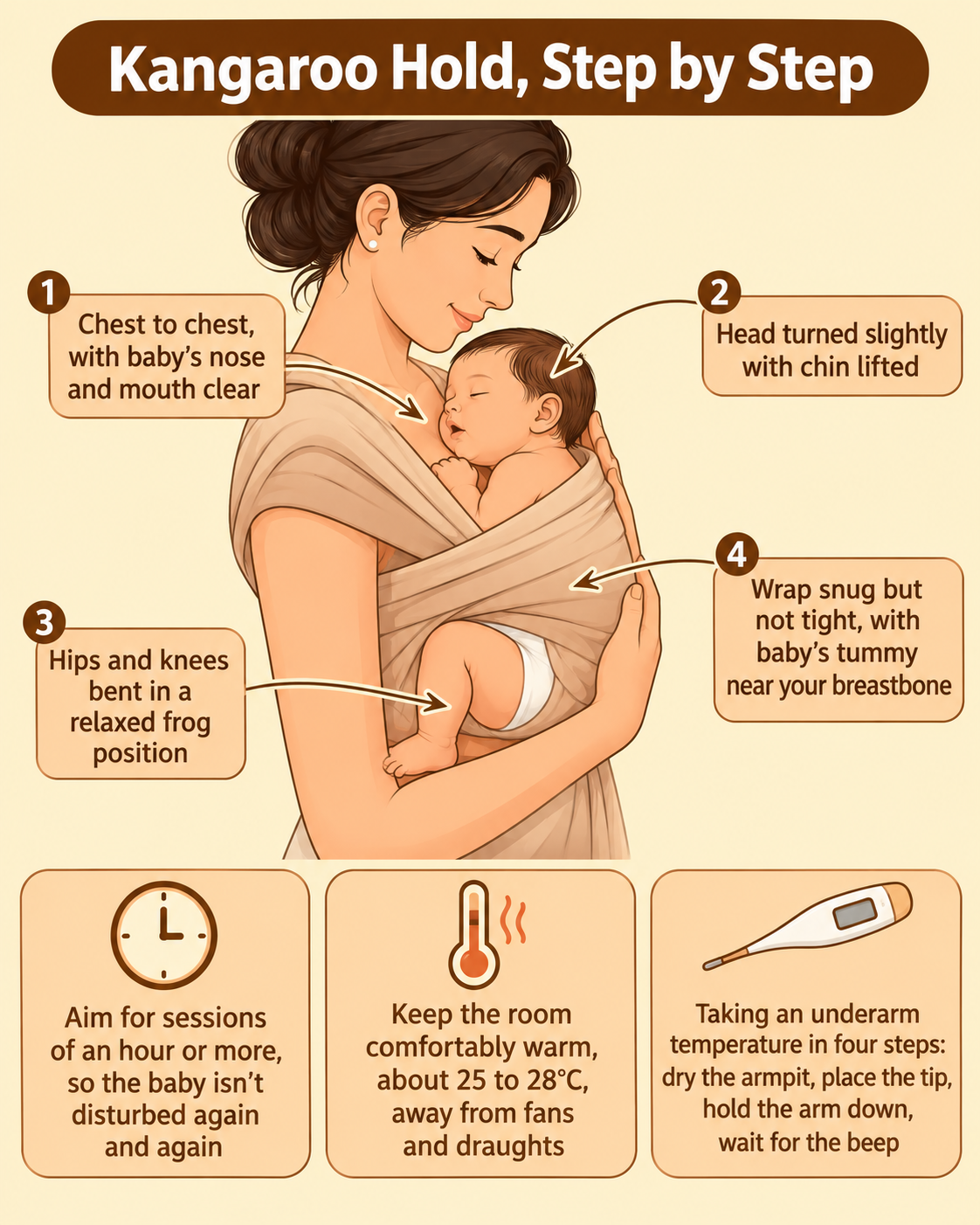
- Keeping warm and kangaroo mother care: Hold the baby upright on your bare chest, wearing a cap and socks, under a cotton cloth. Trial data link kangaroo mother care to better weight gain and fewer infections.
- Feeding: Aim for a feed every two to three hours, which adds up to eight to twelve a day. Sleepy babies get woken for it. If latching is hard, give expressed milk by cup or spoon. Skip water and honey.
- Hygiene and infection safety: Wash your hands before every touch and keep the cord stump dry. Few visitors, and nobody with a cold. A warm damp cloth will do until the doctor okays a bath.
- Daily watching: Each day, note feeding, breathing, colour and urine output. Phone the doctor for a baby who won’t feed, a temperature below 36.5°C or above 37.5°C, fast breathing, spreading yellow skin, fits, limpness or a red cord stump.
Support for small newborns is explained further under care for low birth weight babies.
Not sure which changes in a small newborn are worth a call to the doctor?
What Makes a Baby Small at Birth, and Can It Be Prevented?
A baby ends up small for two main reasons. Either they arrive early, or they don’t grow as well as expected in the womb, and that second route is why even a full-term baby can weigh under 2.5 kg.
|
Cause Group |
Common Examples |
What Can Help |
|
Preterm delivery |
Early labour, twin pregnancy, infection |
Timely antenatal visits, early treatment of infection |
|
Restricted fetal growth |
Placenta problems, high blood pressure, pre-eclampsia |
Blood pressure monitoring, growth scans if advised |
|
Maternal health |
Anaemia, poor diet, depression, gum disease |
Iron and folic acid, regular meals, early treatment of illness |
|
Substances |
Smoking or chewing tobacco, alcohol, drug use, heavy caffeine |
Stopping, with professional support |
- Regular antenatal care: Seeing the doctor early lets problems like high blood pressure, anaemia or infection get caught in time. Several studies tie regular antenatal care to fewer small babies.
- Balanced nutrition: The mother’s diet is the baby’s supply line, so enough calories, protein, iron and folic acid matter. Crash diets during pregnancy work against it.
- Avoiding harmful exposures: Smoking or chewing tobacco, drinking alcohol, taking drugs and heavy caffeine intake all raise the odds of a smaller baby. Secondhand smoke counts as well.
- Managing health conditions and spacing: Conditions such as high blood pressure, thyroid disease, diabetes and infections are easier to handle once controlled early. A gap of at least two years between pregnancies lets the body recover.
Blood sugar swings in pregnancy can influence a baby’s growth. The steps for handling them are in how gestational diabetes is managed.
What Signs Show a Low Birth Weight Baby Is Growing Well?
A single weigh-in doesn’t say much. It’s the trend over several weeks that counts, and follow-up visits are where that trend shows up.

- Weight checks: How often the baby gets weighed is the paediatrician’s decision, usually at follow-up visits. A usual target is 20 to 30 g a day, though the overall pattern matters more. Daily home weighing mostly adds worry.
- Feeding and nappies: Signs of enough milk: eight to twelve feeds a day, a settled baby afterwards, and six or more wet nappies. If the nappies start getting fewer, mention it.
- Screening and vaccines: Vaccines generally follow the baby’s age. Some babies are also advised eye and hearing screening, and the paediatrician will say which tests and when.
- Development: Most children born small develop normally. Even so, low birth weight can affect cognitive and physical development later, which is what developmental checks look for. Doctors judge preterm babies by corrected age, not calend
Key Takeaways
A baby under 2.5 kg mostly needs warmth, regular feeding and an adult who spots changes early. Most grow into healthy children. Skin-to-skin holding and breastfeeding support weight gain, while each check-up shows whether growth is on track. Poor feeding, temperature swings, fast breathing, spreading jaundice or unusual drowsiness mean a prompt call to the doctor. Put plainly, low birth weight baby care at home is routine, patience and keeping appointments.
FAQs
Is a 2.5 kg newborn too small?
Below 2.5 kg counts as low birth weight. At exactly 2.5 kg, it’s borderline.
Will a low birth weight baby be healthy?
Yes. Most grow up well, given regular feeding, warmth and check-ups.
How do I help a low birth weight baby gain weight?
Breastfeed often, hold the baby skin-to-skin and keep every weight appointment.
Why do some full-term babies have low birth weight?
Usually because growth slowed in the womb: placenta problems, anaemia, hypertension or tobacco.
Disclaimer: This blog is for educational and informational purposes only and should not be considered professional advice.
