Five and a half pounds, or 2.5 kg, is the cut-off. Newborns below it are called low birth weight. The scale reports a weight, never a reason. Did the baby arrive early? Did growth stall in the womb? Usually it’s one, sometimes both, and those are the main causes of low birth weight in newborns. Knowing which one applies decides what kind of care a small baby needs.
According to Dr. Kanhu Panda of Rahat Hospital, a child specialist in Bhubaneswar, “Birth weight is a snapshot, not a verdict. A baby can be small because they came early or because they grew slowly before birth, and those two situations call for different care. Finding the reason early, through regular antenatal checks and a careful look at the newborn, tells the family what to watch for in the first few weeks.”
What Makes a Baby Small to Begin With?
Two routes lead here. The baby comes too soon, or the baby grows too slowly. Sometimes it’s both.
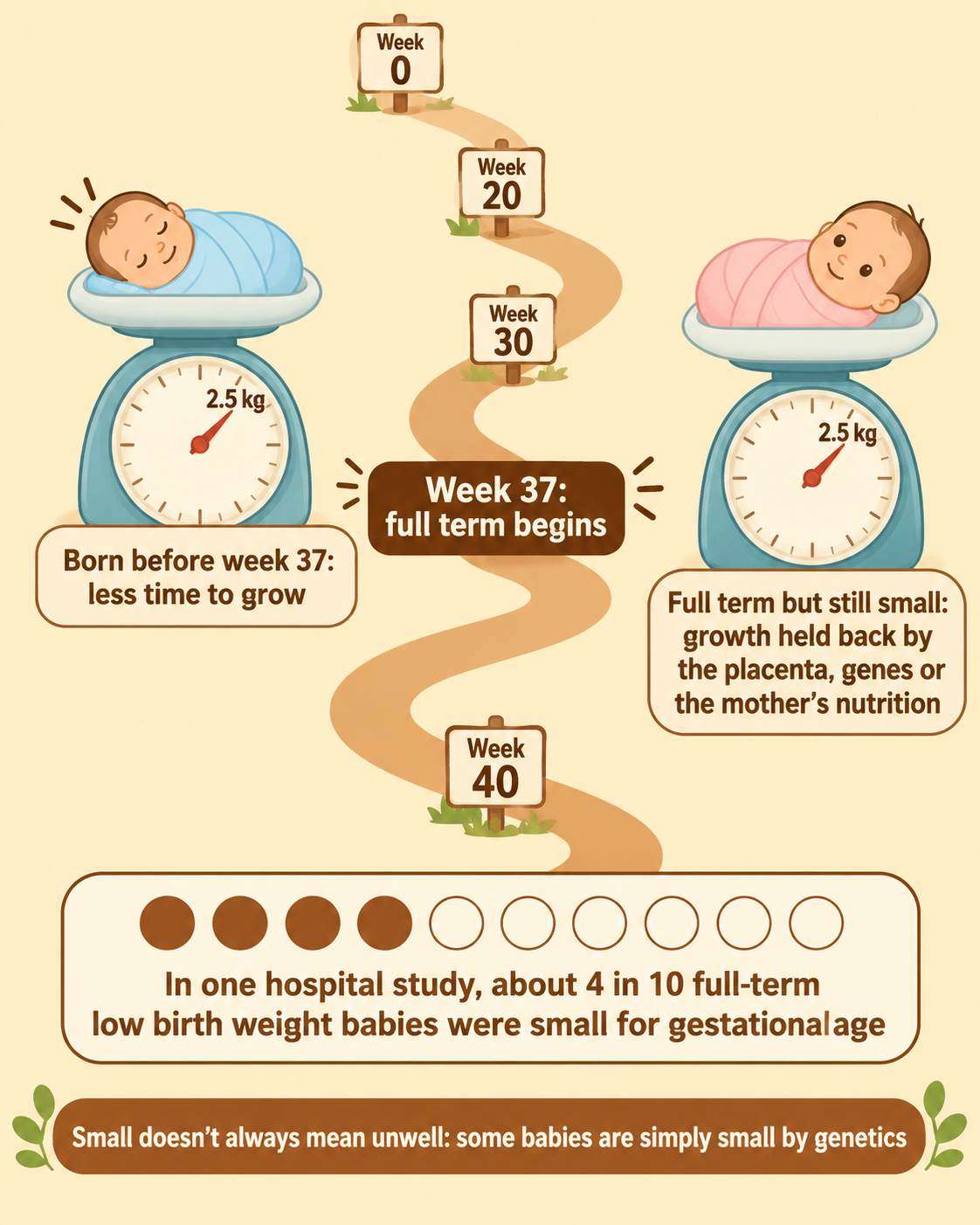
- Preterm birth: The commonest culprit. Every week before 37 is a week of weight not gained. In Japanese hospital records, 65% of singleton low birth weight babies were preterm.
- Slow growth in the womb: Medically, it’s intrauterine growth restriction. The placenta may not deliver enough, or genes may play a part. Either way, the baby can be small at full term.
- The mother’s health and nutrition: Preeclampsia is a big one. In an Indian study, one in three mothers of small babies had it, versus one in twenty others. Low weight before pregnancy mattered.
- Pregnancy and placental factors: With twins or triplets, one supply is split between babies. A poorly working placenta hurts too. So do missed check-ups, and being under 20 or over 35.
What does that look like for the mother? More growth scans, more blood pressure readings. Doctors group all of this under high-risk pregnancy monitoring.
Want to know which pregnancy checks help catch a baby’s growth concerns early?
Weight Bands: How Small Is Small?
The label covers a lot of ground. At 2.4 kg a baby may need little beyond warmth and feeding help; under 1 kg, it’s a different story.
| Band | Birth Weight | What to Expect |
| Low birth weight | Under 2.5 kg (2,500 g) | Early arrivals fall here, and so do full-term babies who didn’t grow as expected. Many need only warmth and a bit of feeding help. |
| Very low birth weight | Under 1.5 kg (1,500 g) | Mostly born early. A stay in the neonatal unit is usual. |
| Extremely low birth weight | Below 1 kg (1,000 g) | Usually extremely preterm, under 28 weeks. Intensive care begins at birth. |
- Body temperature and blood sugar: A tiny body has little fat to hold heat. Glucose reserves are thin too, so both can fall quickly. Staff recheck both often in the first days.
- Feeding and breathing: Some can’t suck for long, so milk may go in by tube at first. Early babies can also need oxygen or a breathing aid for a while.
- Infections and jaundice: Newborn immunity is thin, and a young liver clears bilirubin slowly. Both problems are common here. Staff check early and treat early.
- Growth and development: Many small babies do catch up, provided feeding is steady and visits continue. A number face learning, vision or movement difficulties later, so checks go on after discharge.
One question parents ask often is how long a premature baby stays in neonatal care. The answer varies a lot, and this guide on NICU stay for premature babies breaks down why.
Preventing It and Caring for a Small Baby
Some cases happen despite good care. Plenty don’t have to, though, and support that starts before conception does the most good. After birth the plan follows the weight and the cause. Many just need close watching. A minority end up in the NICU.

- Before and during pregnancy: Start check-ups early. Early visits catch anaemia and high blood pressure while there’s time to act. Diabetes or hypertension already? Speak to a doctor before conceiving.
- Eating enough and gaining steadily: Too little weight gain raised the odds of a small term baby 2.46 times in Japanese hospital data. Protein, iron and folate support growth. Tobacco and alcohol don’t.
- Warmth and Kangaroo Mother Care: A parent’s bare chest keeps a small baby warm. Mother’s milk is the preferred feed. Can’t latch yet? Expressed milk can go by cup, spoon or tube.
- Tracking weight gain: Each visit adds a new point to the baby’s growth charts, matched to gestational age. One dot means little. A steady upward curve is the aim.
What about once the baby is home? Feeding schedules, follow-up dates and daily routines are covered in low birth weight baby care.
Key Takeaways
A newborn under 2.5 kg counts as low birth weight. Two things explain most cases: the baby came early, or grew slowly before birth. A mother’s health and diet feed into both. Under 1.5 kg, expect NICU care. Prenatal care lowers the risk. Once the baby is born, warmth, feeding and regular weighing do most of the work.
FAQs
What is behind most low birth weight cases?
Early delivery, before 37 weeks. Less time in the womb, less weight.
Does exactly 2.5 kg still count as low birth weight?
No. Only weights below 2.5 kg count.
Does a full-term birth rule out low birth weight?
No. Slow growth in the womb can cause it, even at 40 weeks.
Is it possible to prevent low birth weight?
Sometimes. Regular antenatal check-ups and enough food cut the odds.
Disclaimer: This blog is for educational and informational purposes only and should not be considered professional advice.
