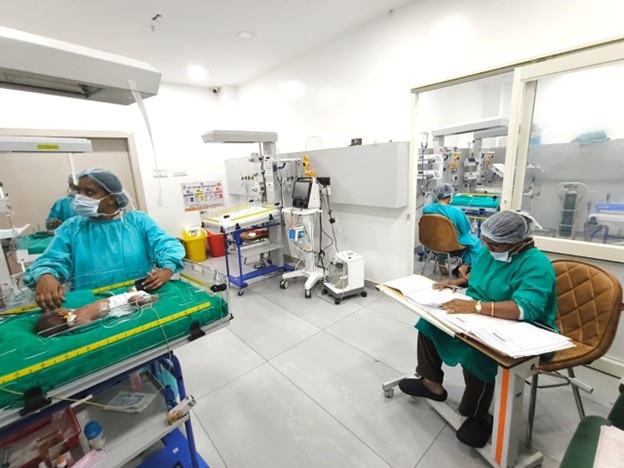
High-Risk Pregnancy Monitoring in Bhubaneswar

A high-risk pregnancy requires more than routine antenatal care. It requires a specialist who can identify complications early, monitor both mother and baby closely, and act decisively when the situation demands it.

At Rahat Hospital, Dr. Reshma Krishna Priya leads our High-Risk Pregnancy programme with an DNB in Obstetrics and Gynaecology. Her approach combines advanced diagnostic monitoring with personalised care, ensuring every patient feels supported at every stage.
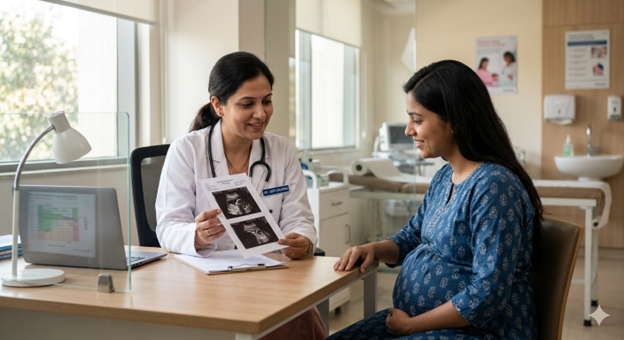
Doctor with stethoscope shows ultrasound images to a pregnant patient in a clinic, seated at a desk with medical documents and equipment nearby.

Personalised High-Risk Pregnancy Care at Rahat Hospital

Some pregnancies carry additional risks due to the mother’s medical history, age, pre-existing conditions, or complications identified during the current pregnancy. These pregnancies require a structured monitoring plan that goes beyond standard antenatal visits.

At Rahat Hospital, high-risk pregnancy care is built around three core strengths:

E

Fellowship-Trained Fetal Medicine Specialist

Dr. Reshma’s Fellowship in Fetal Medicine covers the diagnosis and management of fetal abnormalities, placental complications, and high-risk obstetric conditions. This is a specialist credential beyond a standard DNB in Obstetrics and Gynaecology.
E

Comprehensive Monitoring Under One Roof

Growth scans, Doppler studies, anomaly screening, cervical length assessment, and fetal wellbeing evaluation are all available at Rahat Hospital. No referrals to external diagnostic centres are needed.
E

On-Site Level III NICU

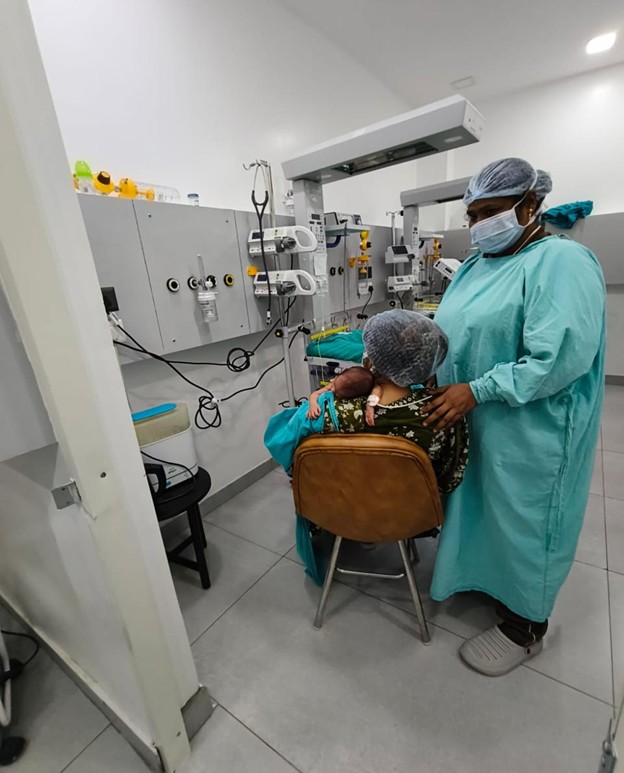
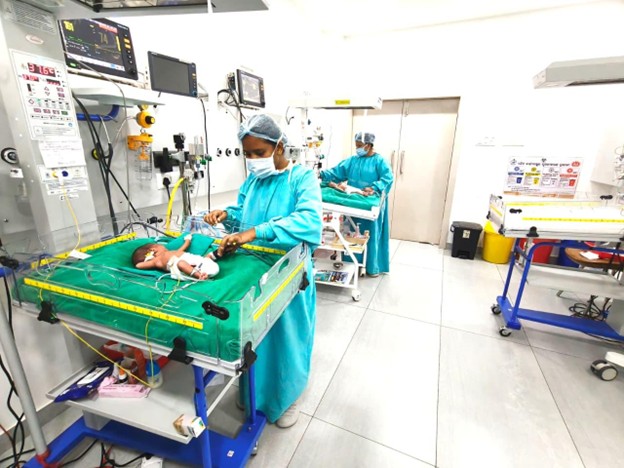
For pregnancies with anticipated preterm delivery or neonatal complications, Dr. Reshma coordinates directly with our NICU team. Newborns needing continued care have access to paediatric treatment within the same facility.
Concerned About Your Pregnancy? Book a Specialist Consultation. Dr. Reshma Krishna Priya | Rahat Hospital, Bhubaneswar Call: 09923288288

Conditions Associated With High-Risk Pregnancy

At Rahat Hospital, we manage the full range of conditions that classify a pregnancy as high-risk:
E

Gestational Diabetes Mellitus (GDM)

E
Preeclampsia and Pregnancy-Induced Hypertension
E
Placenta Praevia and Placental Abruption
E
Intrauterine Growth Restriction (IUGR)
E
Previous Caesarean Section
E
Preterm Labour and Cervical Incompetence
E
Multiple Pregnancy (Twins, Triplets)
E
Advanced Maternal Age (35 years and above)
E
Thyroid Disorders in Pregnancy
Stylized pregnant silhouette with a fetus and medical icons (heart monitor, ultrasound, blood pressure cuff, DNA strand, chart) representing prenatal care.

Women with Polycystic Ovary Syndrome (PCOS) also fall into the high-risk category during pregnancy. PCOS is associated with a higher likelihood of gestational diabetes, pregnancy-induced hypertension, and preterm birth, all of which require structured monitoring throughout the pregnancy.

High-Risk Pregnancy Monitoring and Diagnostic Evaluation

Effective high-risk pregnancy management depends on timely, accurate monitoring. At Rahat Hospital, we use a structured set of investigations throughout every trimester.

First Trimester Screening (11 to 14 weeks)

Includes dating scan, Nuchal Translucency (NT) measurement, Combined First Trimester Screening, and uterine artery Doppler for early preeclampsia and placental insufficiency risk assessment.

Anomaly Scan (18 to 22 weeks)

Detailed assessment of fetal anatomy, organ development, placental position, amniotic fluid volume, and cervical length, with additional scrutiny for identified risk factors.

Serial Growth Scans

Scheduled every two to four weeks for pregnancies complicated by IUGR, gestational diabetes, hypertension, or multiple pregnancy. Measures fetal biometry, estimated fetal weight, and amniotic fluid index.

Doppler Studies

Assessment of blood flow in the umbilical artery, middle cerebral artery, and ductus venosus to detect placental insufficiency and fetal compromise at an early stage.

Cardiotocography (CTG)

Fetal heart rate monitoring in the third trimester and during labour to assess wellbeing and identify signs of fetal distress.

Cervical Length Assessment

Transvaginal ultrasound to identify women at risk of preterm birth, incorporated into the monitoring schedule for patients with relevant history.

Maternal Blood Investigations

Tailored to each patient’s risk profile, including blood glucose, thyroid function, liver and kidney panels, urine protein, haemoglobin, and coagulation studies.

Genetic and Chromosomal Screening

NIPT, amniocentesis, and chorionic villus sampling (CVS) are coordinated where clinically indicated, alongside detailed counselling.

Ready to Begin Your High-Risk Pregnancy Monitoring Plan? Book Your Consultation with Dr. Reshma at Rahat Hospital Today. Call: 09923288288

Why Choose Rahat Hospital for High-Risk Pregnancy Monitoring?

E

Fellowship in Fetal Medicine

Dr. Reshma’s Fetal Medicine Fellowship is a rare qualification in Bhubaneswar, covering advanced fetal assessment, placental diagnosis, and high-risk obstetric management beyond standard gynaecological training.
E

10+ Years of Experience

Dr. Reshma has managed gestational diabetes, preeclampsia, IUGR, multiple pregnancy, cervical incompetence, and fetal anomaly cases across more than a decade of clinical practice.
E

Level III NICU Within the Same Facility

For high-risk deliveries where neonatal support is anticipated, our neonatal care unit in Bhubaneswar is available on-site. The neonatal team is briefed prior to delivery, eliminating the risks and delays of inter-hospital transport.
E

One Specialist Throughout

Patients are seen by Dr. Reshma personally at every visit — from first consultation through to painless normal delivery

FAQs

Q1: What makes a pregnancy high-risk?

A pregnancy is high-risk when conditions such as diabetes, hypertension, previous pregnancy loss, fetal abnormalities, multiple pregnancy, or advanced maternal age increase the likelihood of complications for the mother or baby.

Q2: Who is the high-risk pregnancy specialist at Rahat Hospital?

Dr. Reshma Krishna Priya, who holds an MBBS, DNB in Obstetrics and Gynaecology, and a Fellowship in Fetal Medicine, with over 10 years of experience managing complex pregnancies.

Q3: What is a Fellowship in Fetal Medicine?

It is a post-DNB specialisation covering advanced fetal diagnosis, Doppler assessment, anomaly screening, and management of conditions like IUGR and preeclampsia. Not all obstetricians hold this qualification.

Q4: How often will I need monitoring visits?

Visit frequency depends on the specific condition. Some patients need fortnightly growth scans, others require weekly Doppler studies or twice-weekly CTG. Dr. Reshma prepares an individualised schedule at the first consultation.