
Preeclampsia at 22 weeks is classified as early-onset preeclampsia, a serious pregnancy complication marked by high blood pressure (140/90 mmHg or above) and protein in the urine after 20 weeks of gestation. It affects around 5 to 8 percent of pregnancies, and early-onset cases before 34 weeks carry a higher risk of complications for both mother and baby. Early detection through blood pressure monitoring and urine testing is critical for safe management.
According to Dr. Reshma K Priya, an experienced Gynaecologist in Bhubaneswar, “Preeclampsia appearing as early as 22 weeks needs close monitoring because early-onset disease progresses faster. The goal is to protect the mother’s organs while giving the baby as much time as safely possible to mature.”
Signs and Symptoms
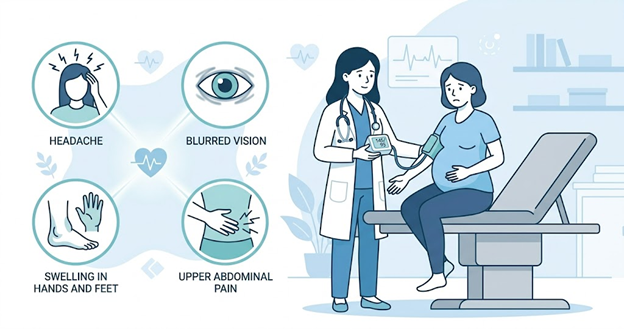
Early-onset preeclampsia can develop silently, which is why routine antenatal checks matter. Some women have no symptoms until blood pressure is measured.
Common signs and symptoms at 22 weeks:
High blood pressure:
Readings of 140/90 mmHg or higher on two occasions
Protein in urine (proteinuria):
Detected on a routine urine dipstick or lab test
Severe or persistent headache:
Often not relieved by usual painkillers
Visual disturbances:
Blurred vision, flashing lights, or temporary vision loss
Upper abdominal pain:
Usually below the ribs on the right side
Sudden swelling (oedema):
In the face, hands, and feet
Rapid weight gain:
More than 2 kg in a week from fluid retention
Nausea or vomiting:
Appearing suddenly in the second half of pregnancy
Reduced urine output:
A sign of kidney involvement
Red-flag symptoms requiring emergency care:
- Severe headache with visual changes
- Breathlessness (possible fluid in the lungs)
- Severe pain below the ribs
- Convulsions or seizures (eclampsia)
If you have high blood pressure or swelling in pregnancy, Book Appointment for an urgent preeclampsia evaluation.
Causes & Risk Factors for Early-Onset Preeclampsia
Preeclampsia originates from abnormal development of the placenta and its blood vessels, which restricts blood flow and triggers high blood pressure and organ stress.
The main causes and contributing factors:
Abnormal placental development:
Poorly formed placental blood vessels reduce blood supply, the root cause of preeclampsia
Maternal blood vessel dysfunction:
Impaired ability of vessels to dilate normally
Immune system response:
An abnormal maternal response to the placenta
Genetic predisposition:
Family history of preeclampsia in mother or sister
High-risk patient profiles:
|
Risk factor |
Increase in preeclampsia risk |
|
First pregnancy |
2 to 3 times higher |
|
Previous preeclampsia |
7 times higher |
|
Chronic hypertension |
5 times higher |
|
Pre-existing diabetes |
3 to 4 times higher |
|
Multiple pregnancy (twins) |
3 times higher |
|
Obesity (BMI over 30) |
2 to 4 times higher |
|
Maternal age over 40 |
2 times higher |
|
Kidney disease or autoimmune disorder |
3 to 5 times higher |
Early-onset preeclampsia before 34 weeks is more strongly linked to placental dysfunction than late-onset disease, which makes it more severe. See Pregnancy Care in Bhubaneswar for high-risk pregnancy monitoring.
Diagnosis & Monitoring of Preeclampsia at 22 Weeks
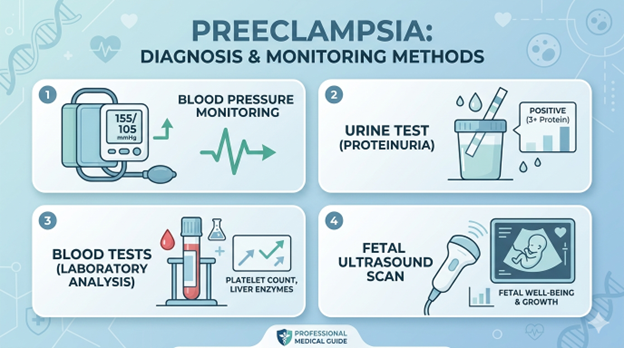
Diagnosis combines blood pressure measurement, laboratory tests, and fetal assessment. A single high reading is not enough, confirmation is required.
Diagnostic and monitoring tools:
Blood pressure monitoring:
Two readings of 140/90 mmHg or higher, at least 4 hours apart
Urine protein test:
Dipstick screening followed by protein-creatinine ratio or 24-hour urine collection
Blood tests:
Liver function, kidney function, platelet count, and full blood count to check for organ involvement
sFlt-1/PlGF ratio:
A specialised blood biomarker test that helps predict and confirm preeclampsia
Fetal ultrasound:
To assess baby’s growth, amniotic fluid, and umbilical artery blood flow (Doppler)
Fetal monitoring:
Cardiotocography (CTG) to track the baby’s heart rate
Women experiencing other postpartum discomforts such as pelvic pain should also discuss these with their gynaecologist during monitoring visits.
Monitoring schedule for early-onset preeclampsia:
|
Assessment |
Frequency |
|
Blood pressure check |
Every visit, sometimes daily |
|
Urine protein |
Each antenatal visit |
|
Blood tests (liver, kidney, platelets) |
Weekly or twice weekly |
|
Growth scan |
Every 2 weeks |
|
Doppler and CTG |
Weekly or as advised |
Diagnosis at 22 weeks usually means hospital referral to a specialist for close high-risk monitoring, since the condition can worsen quickly.
When To Consult A Doctor
Preeclampsia is a medical emergency when severe. Early evaluation can prevent life-threatening complications for both mother and baby
Consult a doctor immediately if you experience:
Blood pressure readings of 140/90 mmHg or higher at home
Severe headache that does not improve with rest or medication
Vision changes: Blurring, flashing lights, or spots
Swelling: Sudden puffiness in the face, hands, or feet
Upper abdominal pain: Particularly on the right side under the ribs
Reduced baby movements or any concern about fetal activity
Breathlessness or chest discomfort
Any seizure: Call emergency services immediately
Women with risk factors should not wait for symptoms. Regular antenatal visits from early pregnancy allow detection before the condition becomes dangerous. Low-dose aspirin started before 16 weeks reduces preeclampsia risk by up to 60 percent in high-risk women, which is why early booking matters.
FAQs
Q1: Can preeclampsia really start at 22 weeks?
Yes. Preeclampsia is diagnosed after 20 weeks, so onset at 22 weeks is possible and is classified as early-onset preeclampsia, which tends to be more severe than later cases.
Q2: What blood pressure indicates preeclampsia?
A reading of 140/90 mmHg or higher on two occasions at least 4 hours apart, combined with protein in the urine or signs of organ involvement, indicates preeclampsia.
Q3: Is preeclampsia at 22 weeks dangerous for the baby?
It can be. Early-onset preeclampsia restricts placental blood flow, which may cause growth restriction, low amniotic fluid, or premature delivery. Close monitoring reduces these risks significantly.
Q4: Can preeclampsia be cured during pregnancy?
There is no cure except delivery of the baby and placenta. At 22 weeks, the focus is on controlling blood pressure and monitoring closely to safely extend the pregnancy as long as possible.
Q5: How can preeclampsia be prevented?
Low-dose aspirin from before 16 weeks in high-risk women, adequate calcium intake, blood pressure control, and regular antenatal monitoring are the most effective preventive measures.
