
Give it roughly six to eight weeks before you feel properly like yourself again after a cesarean, starting with a few days in hospital. But that figure describes the outside. Skin is the fast part, usually sealed within two weeks or so. Underneath, the muscle layers and the uterus are still mending, and that carries on for months. So c-section recovery time isn’t really one number. It’s a series of stages, and knowing roughly what each involves makes it easier to arrange rest and extra hands at home without rushing the pace.
According to Dr. Reshma K Priya of Rahat Hospital, a gynaecologist in Bhubaneswar, “People tend to judge recovery by the scar, and the scar is the quickest part to settle. The muscle layers and the uterus take much longer to recover and regain their strength. Feeling good at three weeks is encouraging, but it doesn’t mean the deeper tissue healing is complete, so rest and a gradual return to activity still matter well into the second month.”
What Does C-Section Recovery Look Like Week by Week?
A c-section recovery week by week doesn’t move in a straight line, but the stages do follow a familiar order.
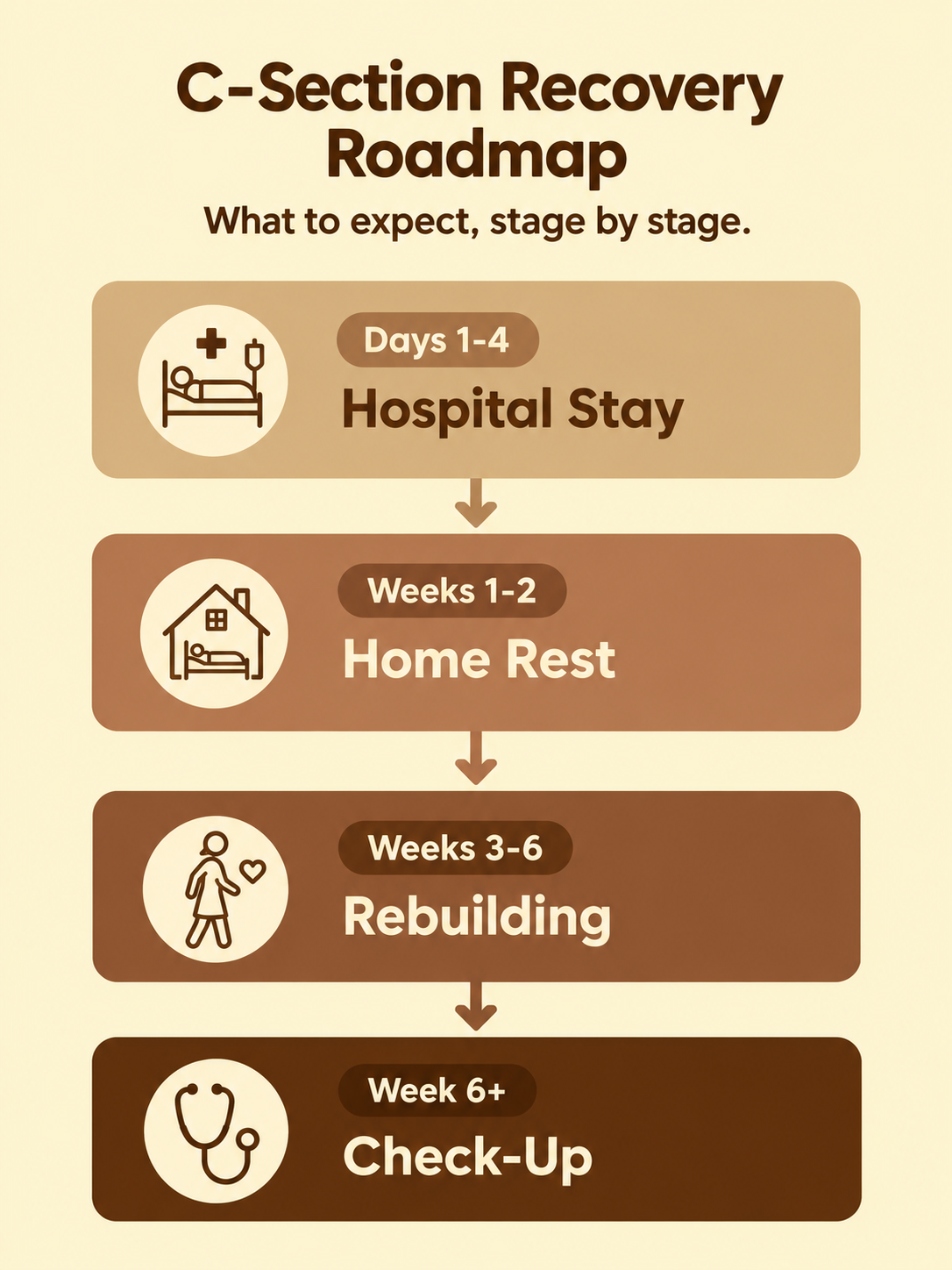
- Days 1 to 4: The hospital stay, and for most women the roughest part. Once the anesthesia wears off, it’s often trapped gas that hurts most, not the incision. A nurse will have you up and shuffling within the first day, and that first walk is slower than you’d think. It still counts.
- Weeks 1 to 2: Rest as much as you can, with short walks indoors. Bleeding hasn’t stopped, the incision still pulls when you move, and the tiredness can feel out of proportion to what you’ve actually done. Accept help when it’s offered, because an hour of someone else holding the baby can give you valuable time to rest.
- Weeks 3 to 6: You’ll have more good days than bad ones by now. Do too much in a single afternoon and the soreness will remind you, so take it as a nudge to slow down rather than a setback. Leave driving until you can brake firmly and look over your shoulder without it hurting.
- Week 6 onward: This is when the postnatal check usually gives the go-ahead for exercise and sex. Outwardly you may look fully healed. Inside, the deeper muscles are still recovering, and your core will take months, not weeks, to feel strong again.
A step-by-step account of the operation itself is on the cesarean section delivery page.
Knowing what’s normal at each stage makes it easier to spot what isn’t.
How Can You Tell if Your Incision Is Healing Normally?
A healing incision behaves in fairly predictable ways. That’s what makes a change worth noticing.
|
Sign |
Usually Normal |
Needs Medical Attention |
|
Incision |
Slight redness, tenderness and itching |
Redness that keeps spreading, swelling, pus, a foul smell, or edges pulling apart |
|
Pain |
Eases a bit every day; sharper when you cough or stand |
Gets worse instead of better, or stays severe despite prescribed medicine |
|
Temperature |
Normal |
Fever of 38°C (100.4°F) or above |
|
Bleeding |
Slowly lightens over several weeks |
A pad soaked in an hour, or large clots |
- Incision appearance: The incision should be closed, dry and slightly pink, hurting a little less each week. Numbness around it is common, and it can hang around for months. The c-section scar itself takes about a year to soften and fade.
- Internal pain after a c-section: Some pulling or twinging deep inside is normal while the uterus and muscles heal, and trapped gas can send a sharp ache up to the shoulder. Some women still experience discomfort two months after a C-section, so mention it at your postnatal checkup, even if it seems mild.
- Bending and lifting: Bend from the knees for now, and don’t lift anything heavier than your baby. Deeper forward bends and heavier loads can wait until the six-week review.
- Signs it’s fully healed: The wound is closed and dry, pressing near it doesn’t hurt, and you can move around more comfortably. Deeper tissue are still healing, so a healed surface doesn’t mean recovery is complete.
Pain centred on the pelvis rather than the incision has its own explanation under postpartum pelvic pain.
What Can You Do at Home to Support Recovery?
Much of the healing happens between appointments, through everyday habits like meals, sleep and walking. They matter more than they sound.

- Recovery food: Try to include protein at every meal, such as eggs, dal, paneer or fish, because the wound needs it to rebuild. Have iron-rich lentils or greens alongside a squeeze of lemon or a piece of fruit, since vitamin C helps the iron absorb. And drink plenty of water and eat enough fibre, because straining on the toilet is the last thing a fresh incision needs.
- Sleeping positions: Sleeping on your back with a pillow under your knees works well, and so does lying on your side with a pillow tucked between them. Sleeping on your stomach should be avoided. To get up, roll onto your side first and push with your arms, rather than sitting straight up through your abdomen.
- Rest and the 5-5-5 rule: You’ll hear about the 5-5-5 rule: five days in bed, five on the bed, five around the bed. It’s folk guidance rather than a medical protocol, but the point behind it is sound. Early on, give yourself plenty of time to rest.
- Gentle movement and support: A few short walks a day help circulation and digestion. Hold a pillow against the incision whenever you cough, laugh or sneeze. It takes a lot of the sting out.
Changes in bladder control can appear during this stretch as well, and they’re explained under postpartum bladder problems. If you notice leaking, or trouble passing urine, mention it at your checkup.
Key Takeaways
Cesarean recovery time is around six to eight weeks for day-to-day life, but the tissue underneath keeps healing for months. Pain should ease week by week, and the wound should stay clean and dry. Fever, spreading redness, heavy bleeding or pain that’s getting worse all need prompt medical attention. Until then, rest, protein, short walks and a comfortable sleeping posture do most of the work.
FAQs
When is bending down after a C-section okay?
Knee bends are fine early on. Deeper forward bends usually wait about six weeks.
How do I know the C-section wound has healed?
It’s closed, dry and pain-free to touch, and your doctor agrees at the checkup.
How long do I need to rest after a C-section?
Rest as much as you can for two weeks, then ease back gradually.
Which sleeping positions should I steer clear of after a C-section?
Don’t lie on your stomach. Your back or side, with pillows, is better.
Disclaimer: This blog is for educational and informational purposes only and should not be considered professional advice.
