
The risk of miscarriage at 6 weeks of pregnancy is approximately 9 to 14 percent, with the most common cause being chromosomal abnormalities in the embryo. Most early miscarriages happen before 12 weeks, and around 80 percent occur within the first trimester. Recognising warning signs early, including bleeding, cramping, and loss of pregnancy symptoms, helps in timely medical evaluation and management.
According to Dr. Reshma K Priya, an experienced Gynaecologist in Bhubaneswar, “Most 6-week miscarriages are nature’s way of stopping a pregnancy that was never going to develop normally. The priority is confirming the diagnosis through ultrasound and beta hCG, and ensuring the woman is medically and emotionally supported through the next steps.”
Cause Of Miscarriage At 6 Weeks
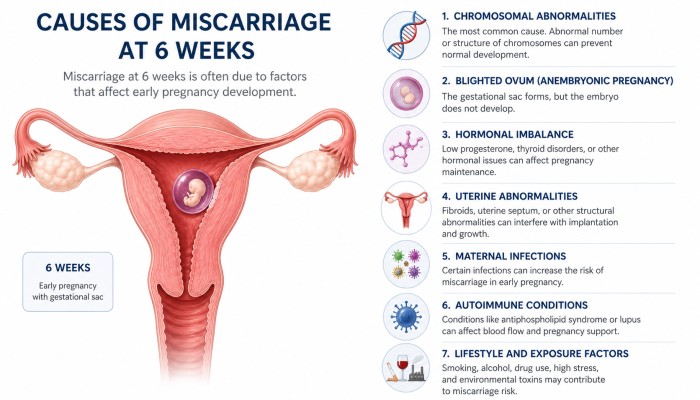
At 6 weeks, the embryo is undergoing critical organ development, and most miscarriages at this stage are linked to non-preventable biological factors rather than maternal behaviour.
The main causes:
- Chromosomal abnormalities: Account for 50 to 70 percent of first-trimester miscarriages, with trisomies, monosomy X, and triploidy being the most common
- Blighted ovum (anembryonic pregnancy): A gestational sac develops without an embryo, often diagnosed around 6 to 8 weeks
- Hormonal imbalance: Low progesterone, untreated thyroid disorders, and uncontrolled diabetes increase risk
- Uterine abnormalities: Septate uterus, fibroids, and intrauterine adhesions affect implantation and growth
- Maternal infections: Listeria, cytomegalovirus, rubella, and untreated UTIs can trigger pregnancy loss
- Autoimmune conditions: Antiphospholipid syndrome and lupus increase miscarriage risk by 3 to 5 times
- Lifestyle and exposure factors: Smoking, heavy alcohol use, recreational drugs, and high caffeine intake (above 300 mg/day)
|
Risk factor |
Estimated miscarriage rate at 6 weeks |
|
Maternal age under 35 |
9 to 12 percent |
|
Maternal age 35 to 40 |
20 to 25 percent |
|
Maternal age over 40 |
40 to 50 percent |
|
Previous miscarriages (2 or more) |
25 to 30 percent |
|
Confirmed fetal heartbeat at 6 weeks |
Drops to 5 to 6 percent |
The American College of Obstetricians and Gynecologists notes that detection of fetal cardiac activity at 6 weeks significantly lowers the ongoing miscarriage risk. See Pregnancy Care in Bhubaneswar for early pregnancy monitoring.
If you are experiencing bleeding or cramping in early pregnancy, Book Appointment for an urgent gynaecological assessment.
Signs and Symptoms Of Miscarriage At 6 Weeks
Not every bleeding episode in early pregnancy is a miscarriage, but certain signs need urgent evaluation.
Vaginal bleeding:
Ranges from light spotting to heavy bleeding with clots
Pelvic and lower back cramping:
Often stronger than typical menstrual cramps
Passing tissue or clots:
Greyish-pink tissue or large clots from the vagina
Sudden loss of pregnancy symptoms:
Disappearance of nausea, breast tenderness, or fatigue
Brown or pink discharge:
Persistent over multiple days
Decreasing beta hCG levels:
Confirmed on serial blood tests
Important distinction: Light spotting in early pregnancy can also occur from implantation bleeding, cervical changes, or subchorionic haematoma, and does not always indicate miscarriage. Around 20 to 25 percent of pregnancies have first-trimester bleeding, but only half result in pregnancy loss.
Red-flag symptoms requiring immediate care:
- Heavy bleeding soaking more than one pad per hour
- Severe one-sided abdominal pain (possible ectopic pregnancy)
- Fever above 38°C with bleeding
- Dizziness, fainting, or signs of shock
Management and Treatment
Treatment depends on the type of miscarriage, gestational age, and the woman’s clinical stability. There are three accepted approaches.
Expectant management (watchful waiting):
- Allowing the body to expel pregnancy tissue naturally over 1 to 2 weeks
- Suitable for incomplete miscarriage with stable vitals
- Success rate of 60 to 80 percent within 2 weeks
- Requires follow-up ultrasound and serial beta hCG monitoring
Medical management:
- Misoprostol (vaginal or oral) to induce uterine contractions and expel tissue
- Often combined with mifepristone for higher success rates
- Effective in 80 to 90 percent of cases within 48 hours
- Avoids surgery and anaesthesia
Surgical management:
- Dilation and curettage (D&C) or manual vacuum aspiration
- Indicated for incomplete miscarriage, heavy bleeding, infection, or failed medical management
- Performed under anaesthesia, takes 10 to 15 minutes
- Lowest risk of retained tissue and complications
Post-management care includes Rh-immunoglobulin if the mother is Rh-negative, iron supplementation if blood loss has caused anaemia, and emotional support through counselling. Most women can attempt pregnancy again after 1 to 3 normal menstrual cycles, depending on physical recovery.
When To Consult A Doctor
Early pregnancy bleeding always needs medical evaluation, but certain situations are non-negotiable emergencies.
Consult a doctor immediately if you experience:
Heavy bleeding:
Soaking more than one sanitary pad per hour for over 2 hours
Severe abdominal or pelvic pain:
Particularly one-sided pain (rules out ectopic pregnancy)
Passing tissue or large clots:
Save the tissue if possible for analysis
Fever or chills:
Above 38°C, especially with foul-smelling discharge
Dizziness, fainting, or rapid heartbeat:
Signs of significant blood loss
Sudden loss of pregnancy symptoms:
Combined with any spotting or cramping
History of recurrent miscarriage:
Any bleeding episode warrants immediate review
Even mild spotting at 6 weeks justifies an early scan and beta hCG check. Confirming fetal heartbeat at this stage drops ongoing miscarriage risk to under 6 percent, which is reassuring information that only an evaluation can provide.
FAQs
1. What is the risk of miscarriage at 6 weeks?
The risk is approximately 9 to 14 percent in women under 35, rising to 40 percent or more in women over 40. Detection of a fetal heartbeat at 6 weeks reduces ongoing risk to 5 to 6 percent.
2. Can a miscarriage at 6 weeks happen without bleeding?
Yes. A missed miscarriage can occur where the embryo stops developing but no bleeding takes place. It is often detected on routine ultrasound when no fetal heartbeat is found.
3. How long does a miscarriage at 6 weeks last?
Bleeding and cramping typically last 1 to 2 weeks. Heavy bleeding lasts 3 to 5 days, followed by lighter bleeding. Beta hCG can take 4 to 6 weeks to return to zero.
4. Can stress cause miscarriage at 6 weeks?
Routine daily stress does not cause miscarriage. Severe physical or emotional trauma may contribute, but most early miscarriages are due to chromosomal causes, not stress.
5. When can I try to conceive again after a 6-week miscarriage?
Most gynaecologists recommend waiting 1 to 3 normal menstrual cycles before trying again, depending on physical recovery, emotional readiness, and underlying cause.
