
There’s no blood test or scan for colic in babies. Doctors reach this diagnosis by pattern alone, watching for a fussy, otherwise healthy infant who cries for more than three hours a day, on at least three days a week, stretching past three weeks. That’s the clinical shorthand pediatricians lean on once anything more serious has been ruled out. Managing it isn’t about fixing a single cause either, since there usually isn’t one. It comes down to checking the baby is actually well, trying calming techniques like rocking or steady background noise, and making sure exhausted parents get some support too.
According to Dr. Kanhu Panda of Rahat Hospital, one of the best child specialist in Bhubaneswar, “Parents come in convinced something’s seriously wrong when a baby won’t stop crying. Most of the time, it’s colic, and the baby is perfectly healthy. What helps most isn’t a medicine, it’s ruling out anything worrying and giving parents a plan for the evenings that feel endless.”
How Do Doctors Diagnose Colic in Babies?
Diagnosing colic in babies comes down to a pattern, not a lab result, and that pattern is really what tells you how worried to be.
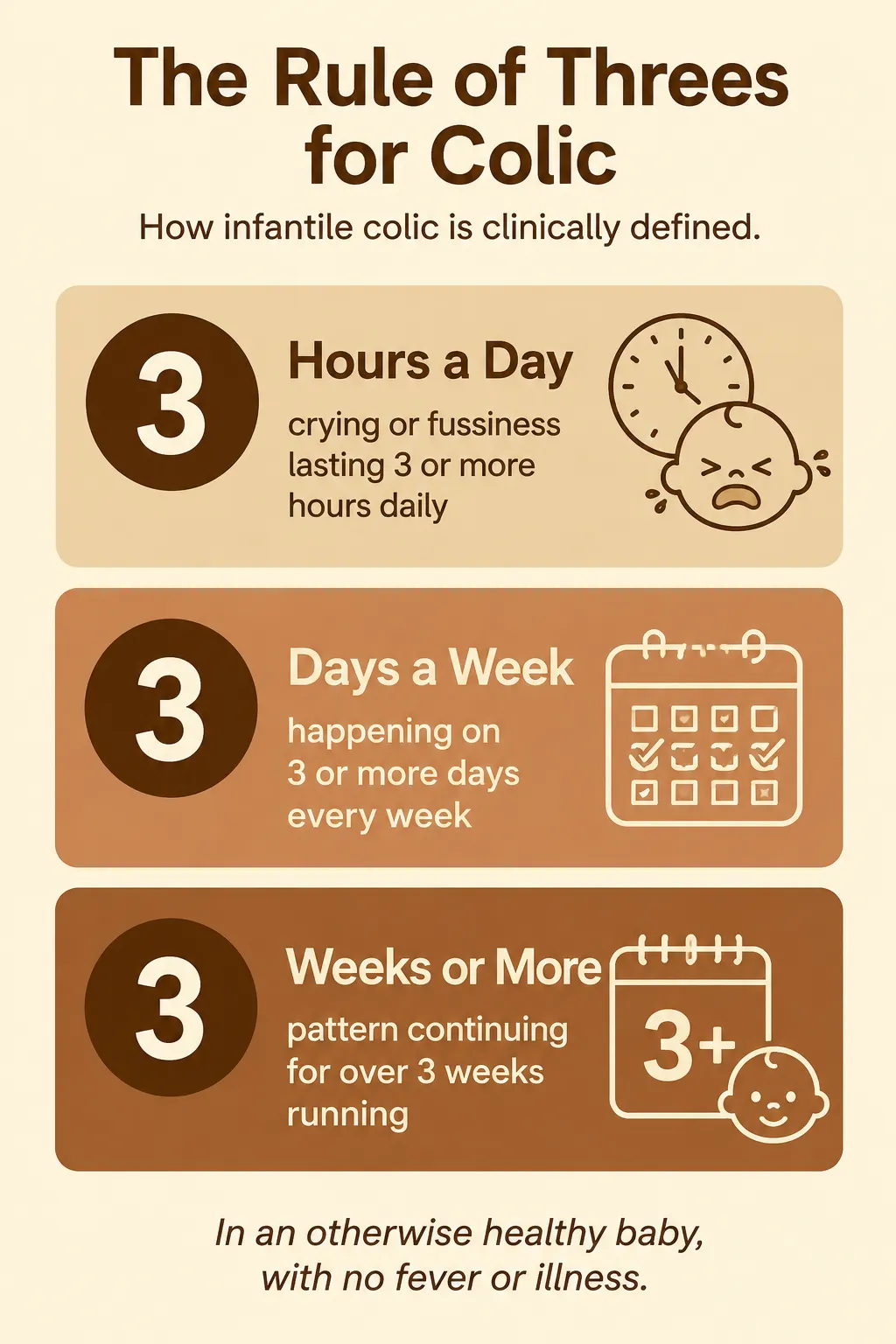
This rule of threes only applies once a pediatrician has ruled out anything more concerning: fever, poor weight gain, feeding trouble, an exam that raises a flag. Colic tends to strike in the evening, kicking off suddenly and stopping just as fast, and that abrupt on-off pattern is part of what sets it apart from an illness that would just keep getting worse. Roughly one in twenty babies who cry like this do have something else going on underneath, so ruling that out isn’t a formality, it’s really the whole point of getting to a colic diagnosis in the first place.
At Rahat Hospital, the pediatric care team works through exactly this kind of assessment before settling on colic as the explanation.
Struggling with endless evening crying spells?
What Helps Manage Colic Once It's Diagnosed?
With anything serious ruled out, managing colic in babies really comes down to comfort, routine, and simply getting through the toughest weeks.
- Rocking and gentle motion: A steady sway or a carrier walk brings back the motion a baby knew before birth. It tends to work faster than just holding still.
- White noise or steady sound: Running a fan, a shushing sound, or a white noise machine covers up the abrupt quiet-to-loud shift that often sets colicky babies off.
- Smaller, calmer feeds: Feeding too much or too quickly loads extra gas onto a stomach that’s already unsettled. Easing the pace can take the edge off.
- Support for exhausted parents: Most colic eases up by three to four months, peaking somewhere around week six. None of that makes the 2am stretch feel shorter, so sharing the load and reaching out for help counts for just as much as any soothing trick.
Comfort and technique work together in every visit here, whether it’s colic or something routine like painless baby vaccinations.
Why Choose Rahat Hospital ?
Rahat Hospital is a women and child care centre in Saheed Nagar, Bhubaneswar, and colic gets taken seriously here, not brushed off as something to just wait out. Dr. Kanhu Panda, Consultant Paediatrician and Neonatologist with over twelve years of experience, runs a full assessment before landing on a colic diagnosis, ruling out reflux, allergy, or infection rather than assuming the obvious. Parents leave with an actual plan for the evenings, not just reassurance that it’ll pass eventually. Because the hospital’s pediatric team is reachable beyond the scheduled visit, a bad night doesn’t have to wait until the next appointment to get addressed.
FAQs
At what age does colic in babies usually start and end?
It tends to begin around two weeks, peak near six weeks, and taper off by four months.
Does colic mean something is wrong with my baby's digestion?
Usually not. Most colicky babies feed well and gain weight at a normal rate.
Can changing formula help with colic?
Rarely, unless there’s a confirmed allergy. Frequent formula switching usually doesn’t help.
When should colic-like crying be checked urgently?
Fever, vomiting, poor feeding, or lethargy alongside the crying calls for prompt medical attention.
Disclaimer: This blog is for general information only and isn’t a substitute for professional medical advice; please consult a qualified doctor for diagnosis and treatment.
