
Prenatal care for high-risk pregnancy involves specialised monitoring, frequent check-ups, and a personalised care plan to manage conditions that threaten the health of the mother or baby. Around 15 to 20 percent of pregnancies are classified as high-risk in India, and proper prenatal care reduces the risk of complications, preterm birth, and maternal mortality by up to 60 percent. Conditions including pre-existing diabetes, hypertension, preeclampsia, multiple pregnancy, and advanced maternal age require structured, gynaecologist-led care.
According to Dr. Reshma K Priya, an experienced Gynaecologist in Bhubaneswar, “High-risk pregnancy is not a diagnosis of doom. It simply means more careful monitoring, earlier intervention, and a customised plan. With the right prenatal care, most high-risk mothers go on to have safe deliveries and healthy babies.”
Warning Signs That Require Immediate Medical Attention During a High-Risk Pregnancy
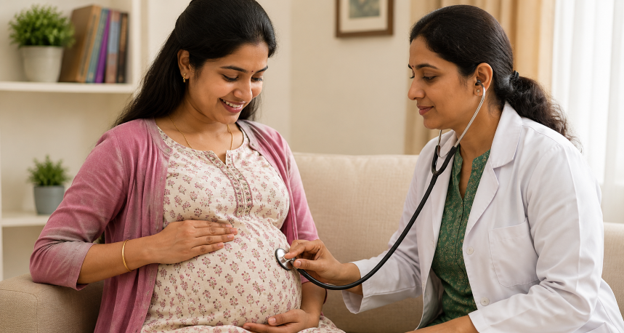
High-risk pregnancies need close monitoring because complications can develop rapidly. Knowing the warning signs ensures timely medical intervention.
Symptoms that require emergency care:
Severe or persistent headache:
Particularly with visual changes, may signal preeclampsia
Sudden swelling:
In the face, hands, or feet within 24 to 48 hours
High blood pressure:
Home readings of 140/90 mmHg or higher
Vaginal bleeding:
Any amount in any trimester
Severe abdominal pain:
Especially upper right side or constant cramping
Reduced fetal movements:
Fewer than 10 movements in 2 hours after 28 weeks
Leaking amniotic fluid:
Sudden watery discharge before 37 weeks
Persistent vomiting:
Inability to keep food or fluids down beyond first trimester
Fever above 38°C:
Especially with chills or foul-smelling discharge
Breathlessness or chest pain:
Can indicate fluid overload or cardiac strain
Convulsions or seizures:
Indicates eclampsia, requires immediate hospitalisation
|
Symptom |
Possible cause |
Action |
|
Severe headache + vision changes |
Preeclampsia |
Same-day evaluation |
|
Vaginal bleeding |
Miscarriage, placental issues |
Emergency review |
|
Reduced fetal movements |
Fetal distress |
Urgent CTG and scan |
|
Leaking fluid before 37 weeks |
Preterm rupture |
Hospital admission |
|
Seizure |
Eclampsia |
Emergency hospitalisation |
If you have a pre-existing condition or risk factors in pregnancy, Book Appointment for a specialised high-risk pregnancy assessment.
Key Components of Prenatal Care in High-Risk Pregnancies

Prenatal care for high-risk pregnancy goes beyond routine antenatal visits. It involves more frequent monitoring, specialised testing, and multidisciplinary input.
The core components:
Early booking and risk assessment:
Detailed history, baseline blood pressure, BMI, blood tests, and ultrasound in the first trimester
Frequent antenatal visits:
Every 2 to 3 weeks until 28 weeks, then weekly or twice weekly depending on condition
Comprehensive blood work:
Haemoglobin, blood group, thyroid, glucose tolerance, liver and kidney function, infection screening
Detailed ultrasound monitoring:
First-trimester dating scan, nuchal translucency at 11 to 13 weeks, anomaly scan at 18 to 22 weeks, growth scans every 2 to 4 weeks in third trimester
Doppler ultrasound:
To assess placental blood flow in conditions like preeclampsia, growth restriction, and diabetes
Fetal monitoring (CTG):
Non-stress tests from 28 to 32 weeks onwards
Specialist consultations:
Endocrinologist, cardiologist, nephrologist, or haematologist as needed
Nutritional and lifestyle counselling:
Tailored diet, exercise, and supplement planning
For structured care across pregnancy stages, Pregnancy Care and dedicated high-risk monitoring services provide integrated support at Rahat Hospital.
Building a Personalized Care Plan for a High-Risk Pregnancy
No two high-risk pregnancies are the same. A personalised care plan addresses the specific condition, gestational stage, and the mother’s overall health, balancing maternal wellbeing with fetal safety.
The plan-building process:
Step 1: Identifying the risk category
| Risk category | Examples |
| Pre-existing medical conditions | Diabetes, hypertension, thyroid, autoimmune disease, kidney disease |
| Obstetric history | Previous preeclampsia, recurrent miscarriage, preterm birth, stillbirth |
| Pregnancy-related conditions | Gestational diabetes, preeclampsia, placenta previa, IUGR |
| Demographic risk | Age below 17 or above 35, BMI over 30 |
| Multiple pregnancy | Twins, triplets, IVF conception |
Step 2: Setting monitoring frequency Visits, scans, and lab tests are scheduled based on condition severity. Some women see their gynaecologist every 2 weeks, others weekly or more often.
Step 3: Medication and supplement plan Aspirin from before 16 weeks for preeclampsia prevention in high-risk women, insulin or metformin for diabetes, antihypertensives if needed, plus folic acid, calcium, iron, and vitamin D as per requirement.
Step 4: Multidisciplinary coordination Involving relevant specialists ensures all conditions are managed together, not in isolation. A diabetic patient with hypertension, for example, needs both endocrinology and cardiology input alongside obstetric care.
Step 5: Delivery planning Mode and timing of delivery are decided based on the condition. Some high-risk pregnancies are safer with planned early delivery, others can continue to term with monitoring. Hospital choice should include neonatal ICU support.
Step 6: Postpartum follow-up High-risk conditions do not end with delivery. Postpartum blood pressure monitoring, diabetes follow-up, and contraception counselling are part of the complete plan.
At Rahat Hospital, Bhubaneswar, every high-risk pregnancy receives a tailored care plan with gynaecologist-led monitoring, specialist consultations, and 24/7 obstetric and neonatal support under one roof.
Take the first step toward a safer high-risk pregnancy with specialised prenatal care at Rahat Hospital, Bhubaneswar.
FAQs
Q1: What makes a pregnancy high-risk?
A pregnancy is high-risk if the mother has pre-existing conditions like diabetes or hypertension, is over 35, has a history of pregnancy complications, is carrying twins or more, or develops conditions like preeclampsia or gestational diabetes during pregnancy.
Q2: How often should I see my doctor in a high-risk pregnancy?
Visits are typically every 2 to 3 weeks until 28 weeks, then every 1 to 2 weeks, and weekly or more after 36 weeks. Severe conditions may require even more frequent monitoring or hospital admission.
Q3: Can a high-risk pregnancy have a normal delivery?
Yes, many high-risk pregnancies result in normal vaginal delivery with proper monitoring. The decision depends on the specific condition, baby’s position, and how the mother responds to labour.
Q4: Are extra scans safe in high-risk pregnancy?
Yes. Routine and Doppler ultrasounds are safe during pregnancy and are essential tools for monitoring fetal growth and placental function in high-risk cases.
Q5: Does high-risk pregnancy mean my baby will have problems?
Not necessarily. With appropriate prenatal care, the majority of high-risk pregnancies result in healthy babies. Risk is about probability, not certainty, and good monitoring reduces complications significantly.
Reference Links:
World Health Organization – Antenatal Care (https://www.who.int/health-topics/maternal-health)
NIH / NICHD – High-Risk Pregnancy (https://www.nichd.nih.gov/health/topics/high-risk)
